
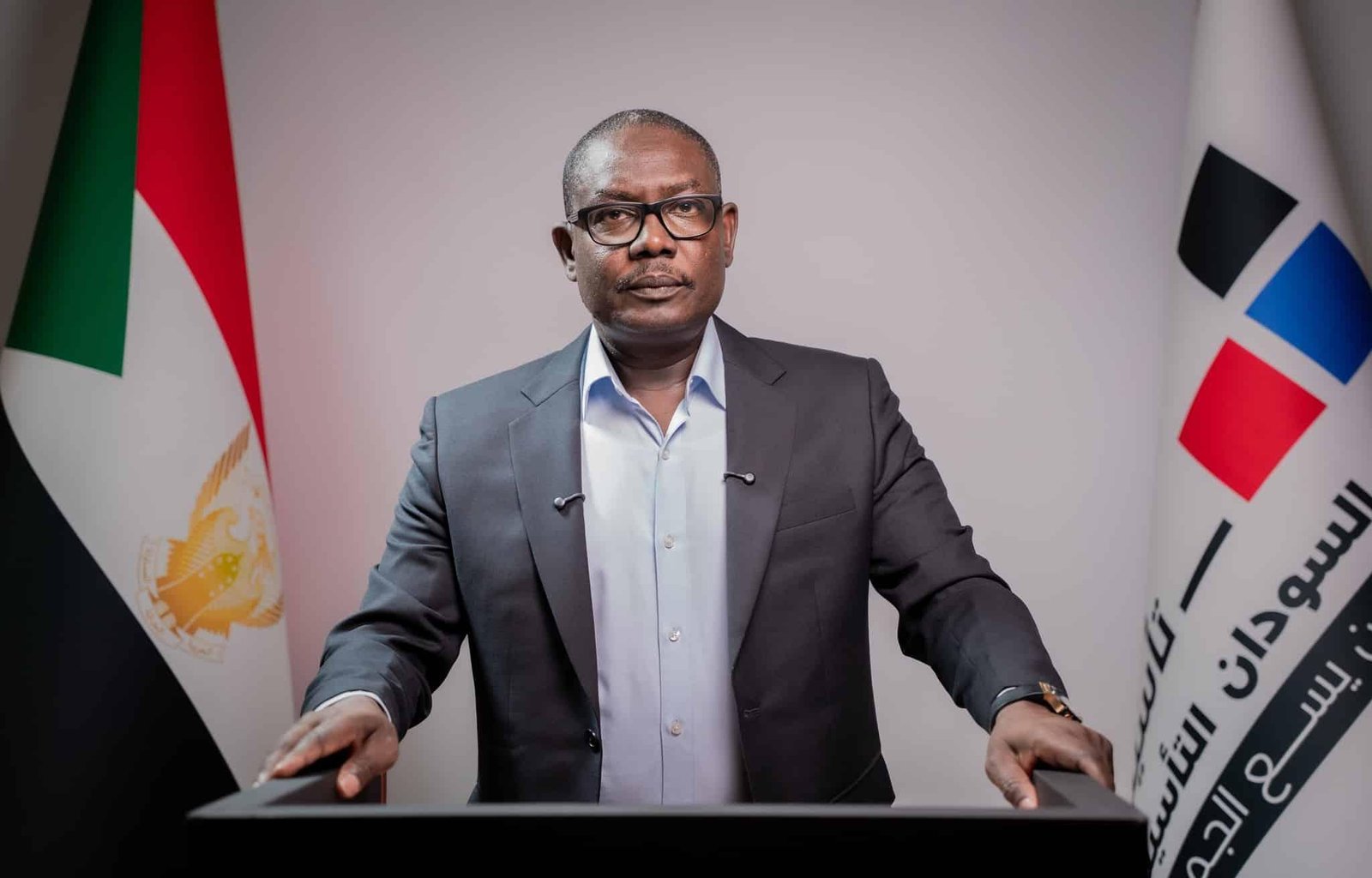
By Mohammed Hassan al-Ta’ishi
The war that erupted in Sudan in April 2023 has inflicted devastation on a staggering scale. It is tempting to view the conflict as a confrontation between two armed forces that can be resolved by ending the fighting and restoring the institutions that existed before the war. A ceasefire is urgently needed. But Sudan’s wars did not begin in 2023, and peace will remain elusive if the conditions that gave rise to them are left unaddressed.
For decades, political power and national wealth have been concentrated at the centre, while communities across Sudan have endured exclusion, dispossession and violence. The wars in South Sudan, Darfur, South Kordofan and Blue Nile were not isolated episodes.
They reflected deeper structural failures in the way the Sudanese state was established and governed. Repeated military coups further undermined civilian rule and weakened public institutions. Simply restoring the prewar political order would risk reproducing the very conditions that have fuelled Sudan’s recurring conflicts.
The Tasis coalition emerged from a different political vision: the establishment of a democratic, secular state founded on equal citizenship, accountable institutions and an equitable distribution of political power and national resources. Its members include civilian and democratic forces, revolutionary movements and constituencies representing communities deeply affected by war. Although they come from different political traditions and historical experiences, they share a commitment to addressing the structural failures that have repeatedly plunged Sudan into conflict.
A central element of this vision is the creation of a unified national army. Sudan cannot achieve lasting peace through an indefinite struggle among competing armed formations, nor by simply restoring a military institution shaped by the political order of the past.
A national army must be built on a fundamentally different foundation: professionalism, a clearly defined national mandate, civilian oversight and equal protection for all Sudanese citizens. Its role must be to defend the country and its people, not to advance the interests of a political party, an ideology or a ruling elite.
The same principles must guide the formation of government. Ministries, local administrations, public services and oversight institutions must operate within clearly defined constitutional, legal and administrative frameworks. After years of conflict, Sudanese citizens urgently need functioning schools, health care, public services and civilian institutions.
They also have the right to know how decisions are made, how public resources are managed and how those entrusted with public office can be held accountable. The delivery of essential services and the establishment of effective oversight are inseparable responsibilities of any functioning government.
These realities provide the context for the establishment of the Government of Peace. Tasis has never argued that military control, in itself, confers political legitimacy. Nor does it claim an exclusive mandate to represent all Sudanese citizens.
Its position is grounded in the practical responsibilities of governing communities that require protection, essential services and functioning public institutions. According to the Government of Peace’s own assessment, its administration extends across approximately 90 localities and affects nearly 23 million people. These figures reflect the scale of the responsibilities it claims to exercise; they should not be interpreted as a claim to sovereignty over Sudan.
The Government of Peace grounds its claim to political legitimacy in its relationship with the populations in the areas under its administration: their need for institutions that serve them, their right to demand accountability, and the partnerships developed around public services, peace and the protection of fundamental rights.
This is distinct from asserting that the existing constitutional or legal order has granted it an exclusive national mandate. Authority, in our view, must be exercised within defined rules and remain accountable to citizens, rather than being left to the discretion of armed commanders or individual officials.
This distinction has implications for the international community. Foreign governments may continue to recognise Sudan as a single state without recognising any particular administration as its sole legitimate representative. However, their diplomatic and practical decisions inevitably shape which Sudanese actors are consulted, who is included in peace negotiations and whose responsibilities on the ground are acknowledged. Treating a coalition that includes civilian and revolutionary forces, maintains administrative institutions and claims direct responsibility for millions of people as merely another political faction risks overlooking important dimensions of Sudan’s current political and humanitarian realities.
Engagement, however, should not be confused with unconditional endorsement. Meaningful diplomatic engagement does not require international recognition of every claim made by a Sudanese political or administrative authority. It does require an objective assessment of each actor’s conduct, territorial reach, administrative capacity and potential contribution to ending the war. The principles of civilian protection, humanitarian access, accountability and respect for fundamental rights must apply equally to all parties.
No political or military actor should be granted a privileged position in determining Sudan’s future solely because of its established relationships with international institutions or its historical place in diplomatic processes.
The challenge before Sudan extends well beyond ending the current conflict. The country’s transformation presents an opportunity to move away from decades of political exclusion, institutional failure and recurring warfare towards a system of governance capable of supporting sustainable development, regional stability, investment and a productive market economy.
A peaceful Sudan, governed by accountable civilian institutions and the rule of law, could play a significant role in strengthening regional cooperation and economic integration. It could also contribute to collective efforts to address violent extremism and transnational security threats that often take root in environments shaped by prolonged conflict, political exclusion and institutional collapse.
For the Sudanese people, the immediate priorities are clear: an end to the fighting, unimpeded humanitarian access and the protection of civilians. But the task of ending this war cannot be separated from the responsibility to prevent another. Sudanese citizens deserve more than another political agreement negotiated over their heads, without meaningful participation from the communities that have endured decades of conflict.
Any credible peace process must address the historical grievances of these communities and confront a fundamental question that has shaped Sudan’s political history for generations: how can a state be built in which every citizen enjoys equal rights, equal protection and an equal sense of belonging?
Our answer begins with institutions that serve the public, a national army accountable to civilian authority and a political settlement that addresses the longstanding imbalance in the distribution of power and wealth.
Tasis and the Government of Peace are prepared to participate in this process and to be held accountable for the responsibilities they undertake. Sudan’s unity and lasting peace will depend not on reconstructing the political order that repeatedly produced conflict, but on building a state that its people can trust.
À propos de l'auteur