
Africa’s diamond-producing countries are facing growing pressure to capture more value from their resources as the global natural diamond market remains weak.
Three years after the start of the downturn, natural diamond prices remain under pressure and consumer demand has declined. The growing popularity of lab-grown diamonds has added to the challenges facing traditional producers.
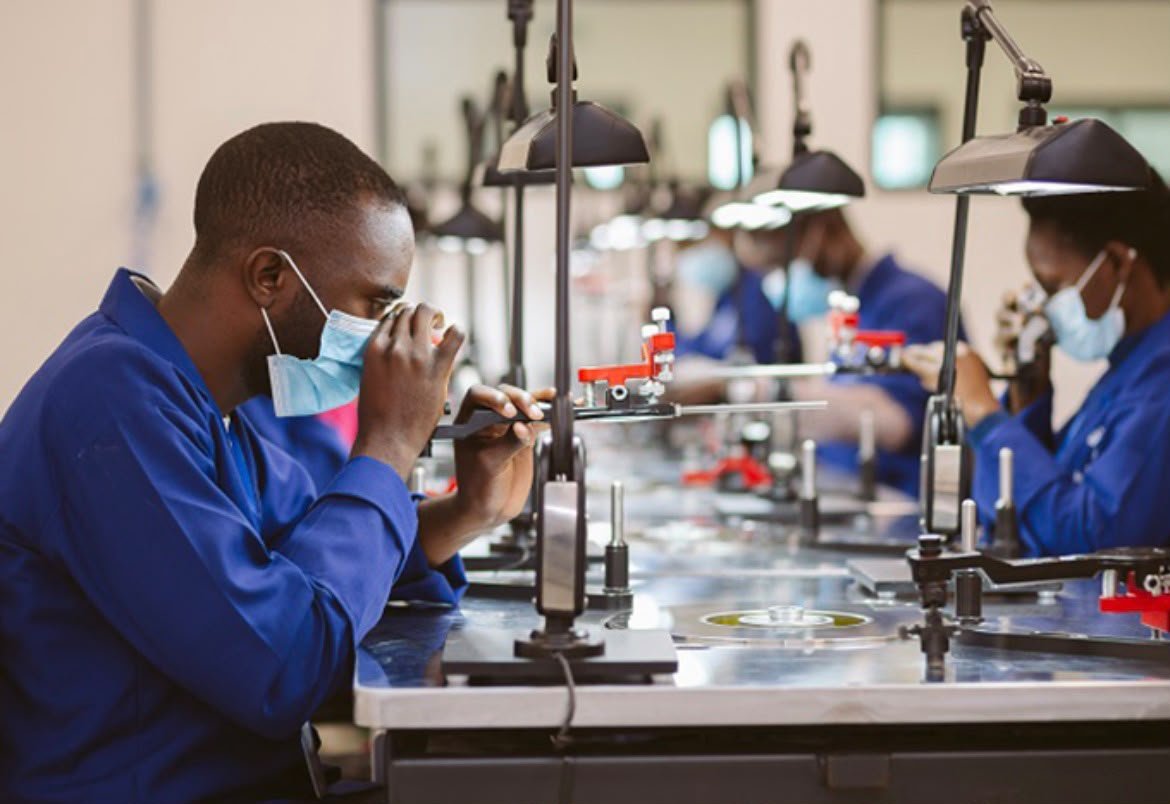
The situation is increasing interest in local cutting and polishing, which could help African countries generate additional revenue, create skilled jobs and reduce their dependence on exporting rough stones.
Botswana struggles to maintain its processing ambitions
Botswana has encountered another setback after Belgian company HB Antwerp decided to reduce its local cutting and polishing activities.
The company’s partnership with the government, announced in 2023, included a planned 24% state stake in HB Antwerp. It also provided for the supply of 10% of the rough diamonds sold by state-owned Okavango Diamond Company over five years.
However, the planned rough diamond allocation was never delivered. At the same time, the global market downturn contributed to lower production in Botswana.
Debswana, jointly owned by the government and De Beers, produced 24.7 million carats in 2023. Output fell to 17.9 million carats in 2024 and 15.1 million in 2025.
Angola expands its processing capacity
Angola is taking a different approach by increasing its focus on domestic diamond processing.
Although local cutting and polishing cannot shield producers from weak global demand, it allows them to retain a larger share of the value generated after extraction.
This is particularly important because India processes around 90% of the world’s diamonds and remains the dominant global centre for cutting and polishing.
Angola became Africa’s largest diamond producer by value in 2025, overtaking Botswana. Botswana, however, continued to lead the continent by production volume.
Angola exported 23,300 carats of polished diamonds worth $109.7 million in 2025. The volume increased by 126.5% year-on-year, while export value rose by 107%.
Local factories also purchased 62,500 carats of rough diamonds for processing, representing a 67.6% increase from 2024.
The country is adding new processing facilities. The opening of Indian company Diarough’s plant in August 2026 brought the number of cutting and polishing factories at the Saurimo Diamond Development Hub to six. A seventh facility is expected to join the hub.
Namibia and South Africa pursue local value creation
Namibia has maintained a domestic diamond processing industry for several years. Between 15% and 20% of its production is supplied to licensed companies for local cutting and polishing.
In 2025, the Namibia Diamond Trading Company reported that 88% of the carats sold to these companies were processed domestically.
However, Namibia still faces questions over taxation and its ability to remain competitive against established international processing centres.
South Africa has also developed a system to support domestic processors. Its State Diamond Trader can purchase up to 10% of national diamond production and resell the stones to local companies.
These companies are required to process at least 80% of the diamonds purchased through the programme. However, the mechanism has struggled to secure the available volumes because of pricing difficulties and declining national production.
A strategic challenge for African producers
Botswana also sees significant room for expansion. In June 2026, Diamond Trading Company Botswana estimated the global cutting and polishing market at $34 billion, compared with $14 billion for exploration, mining and diamond recovery.
The country already has processing plants and trained workers, but skills shortages and productivity remain challenges.
The current diamond crisis could therefore encourage African producers to accelerate policies aimed at developing local processing.
However, building a competitive processing industry requires more than access to rough diamonds. Producers must also address costs, skills, productivity and industrial infrastructure while competing with India’s well-established processing ecosystem.
Angola currently shows the strongest expansion, combining higher supplies of rough diamonds to local factories with new processing capacity. Its challenge will be to sustain this growth and remain competitive, as will other African producers seeking to move beyond the export of raw diamonds.
À propos de l'auteur