
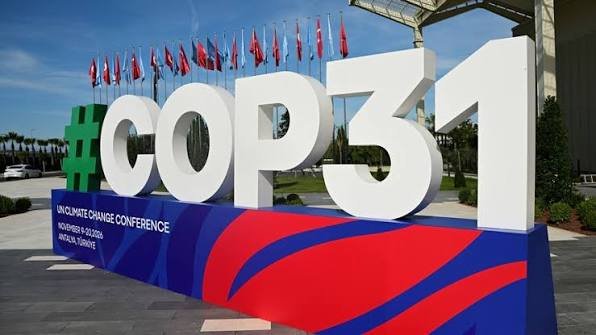
On November 9, in Antalya, Türkiye, agriculture will take center stage from the opening of the 31st Conference of the Parties on climate (COP31). The first day of this major UN gathering, which runs until November 20, will be devoted to several issues, including food security, irrigation, and adaptation to climate change, according to the official program.
Both victims of climate disruption and responsible for nearly a third of greenhouse gas emissions, agriculture and food systems are seeing their role in negotiations increasingly recognized.
But beyond the symbol, expectations remain high. More than ten years after the Paris Agreement, the challenge is less about multiplying promises than about translating recent voluntarism into concrete action.
Long relegated to the background behind energy and transport, agriculture has gradually gained visibility.
From the « Koronivia Joint Work on Agriculture » adopted at COP23 in 2017 to the Sharm el-Sheikh joint work program in 2022, via the Dubai declaration in 2023 supported by 159 countries and the « Harmoniya » initiative in Baku in 2024, commitments have accumulated.
COP30 in Belém in 2025 gave greater recognition to the importance of financing food systems.
The main obstacle remains money. A FAO analysis published in 2025 highlights that the share of climate-related development finance going to agrifood systems fell from 47% in 2000 to 19% in 2023.
Another alarming finding: agrifood systems account for 54% of assessed adaptation needs but receive only 20% of global adaptation finance.
COP30 called for at least tripling this financing by 2035; Antalya will need to specify how to achieve this, with what predictability, and through which instruments.
The other sensitive issue will be the balance between adaptation and emissions reduction.
Some actors insist on methane and technologies, others on agroecology, land tenure, and community rights. These positions imply choices about which agricultural models to finance.
For African countries, the stakes are vital. According to the FAO, disasters caused around $3.26 trillion in global agricultural losses over the 33 years studied, including $611 billion in Africa 7.4% of the continent’s agricultural GDP. COP31 will have to meet a triple challenge: financing risk prevention, supporting lower-emission production, and facilitating post-shock reconstruction.
À propos de l'auteur