
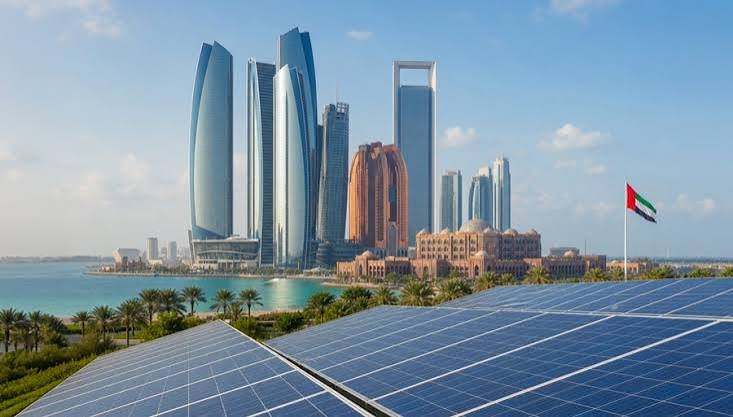
First, the United Arab Emirates is strengthening its role in Africa’s energy transition through major renewable energy investments. Abu Dhabi is promoting a model based on infrastructure, financing and practical cooperation. The approach places access to reliable electricity at the heart of economic development.
Furthermore, through Masdar and the Etihad 7 initiative, the UAE is supporting large-scale renewable energy projects across Africa. Masdar has committed to mobilizing up to $10 billion to develop 10 gigawatts of clean energy capacity on the continent by 2030. Several African countries, including Angola, Uganda and Zambia, are involved in this strategy.
In addition, these projects are designed to provide more than electricity. Reliable power can support factories, businesses, agricultural activities and local industries. In Angola, for example, Masdar is developing a 150-megawatt solar project expected to supply electricity to thousands of households and create local economic opportunities.
Meanwhile, the Emirati strategy focuses on accelerating the implementation of renewable energy projects. Partnerships with African governments and institutions are intended to expand clean energy capacity while improving energy security. The objective is to connect investment with concrete development needs.
Moreover, greater access to electricity can directly support industrial transformation. It can improve food processing, strengthen businesses and help essential services operate more reliably. Renewable energy therefore becomes more than an environmental solution. It becomes an important tool for economic independence.
Finally, the UAE-Africa partnership reflects a growing focus on large-scale investment and practical cooperation. African countries bring their natural resources, markets and development potential. Emirati partners provide financing, technology and project expertise. Through this model, renewable energy can contribute to stronger industries and greater economic sovereignty across the continent.
À propos de l'auteur