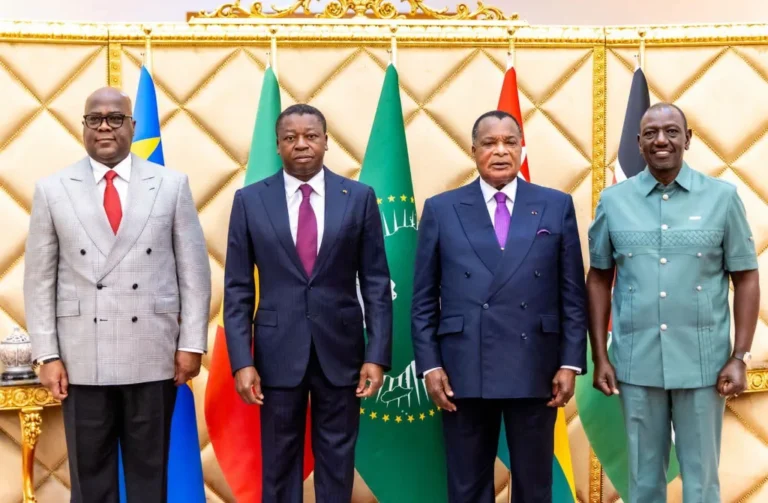

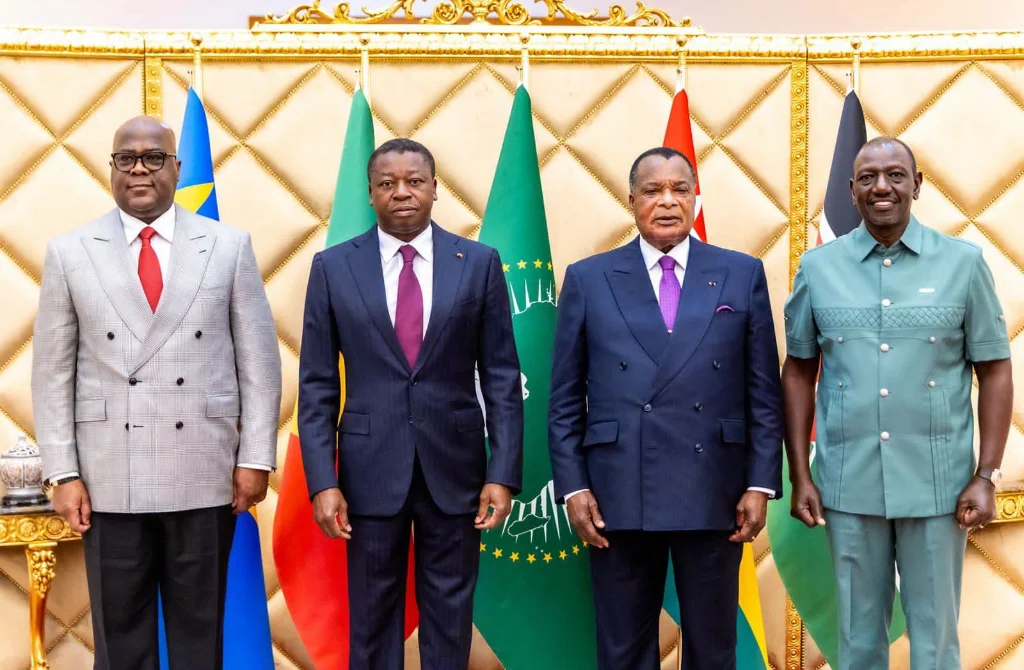
It might be assumed that diplomacy is conducted behind closed doors, in the hushed comfort of official salons. But in Oyo, this Sunday, November 22, 2026, it was experienced instead as an arm-wrestling match won against chaos. Faced with the tensions electrifying the Great Lakes region, Faure Essozimna Gnassingbé did not come to recite a rigid protocol.
The President of the Togolese Council took over with quiet determination, recalling that dialogue and consultation remain the most formidable weapons for defusing crises before they set everything ablaze.
Alongside Denis Sassou N’Guesso, Félix Tshisekedi and William Ruto, the Togolese leader advanced his pieces with surgical precision.
His mandate as African Union mediator took on its full meaning here: he transformed mistrust into a roadmap.
Kinshasa and Nairobi formalized the return of their ambassadors and locked in permanent consultation.
No empty grand speeches, but concrete, immediate, palpable action for populations waiting only to breathe.
What stands out about Faure Gnassingbé is his way of embracing a political vision without pretense: peace is not a luxury for chancelleries, it is the vital fuel of development.
By linking regional security to economic integration and a common response to Ebola, Togo projects an offensive and modern image of pan-Africanism.
Lomé does not suffer the continent’s news; it shapes it, exporting mediation expertise that has become indispensable from the West to the heart of Africa.
At a time when the world doubts political solutions, Togo proves that lucid and constant leadership can move the lines.
In Oyo, the Togolese voice carried its full weight to put the Great Lakes back on the rails of trust.
A demonstration of quiet strength that durably installs Faure Gnassingbé among the major architects of African stability.
À propos de l'auteur