
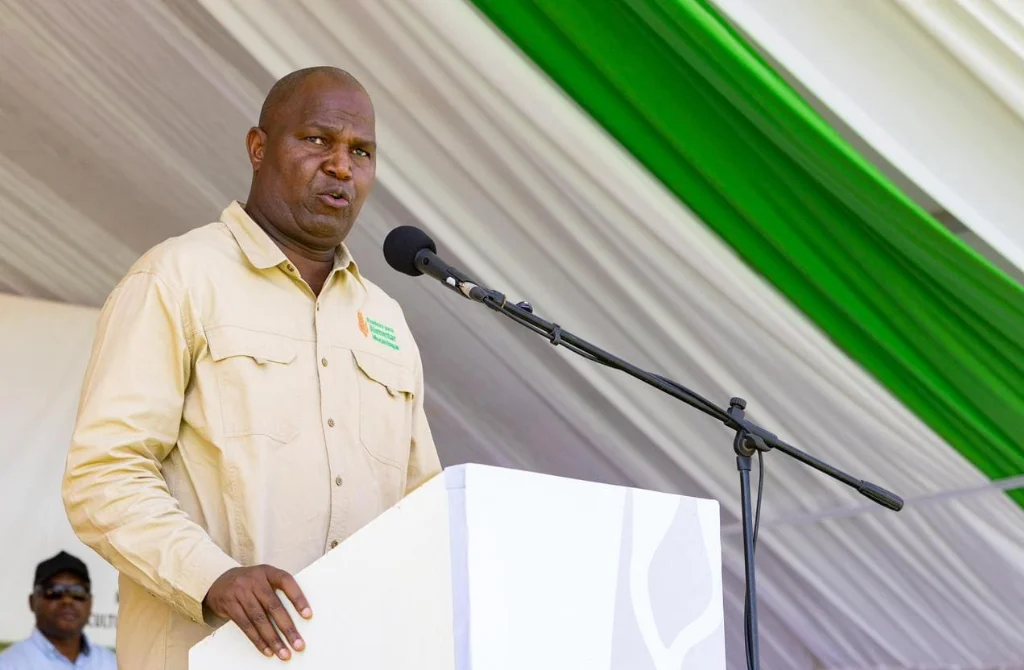
President Daniel Chapo has recently promulgated a law that the Mozambican government presents as a pivotal step in its economic strategy: the creation of the National Development Bank. Approved by Parliament in May on the proposal of the head of state, the institution is endowed with a share capital of approximately 32 billion meticais (501 million dollars), fully subscribed by the state, with the possibility of later opening part of the capital to other investors.
A strategic mission for National Development
The bank’s mission is to structure, finance, and promote projects deemed strategic for the country’s development, while supporting the implementation of economic and social policies. A government statement presented the bank as a lever designed to « promote productive investment, strengthen the national economy, support job-creating initiatives, increase competitiveness, and drive sustainable development. »
A response to a pressing social context
The initiative comes against a worrying social backdrop. According to the World Bank, Mozambique’s poverty rate rose from 48.4% in 2014–2015 to 62.9% in 2022, while human development indicators rank among the lowest in the world. Added to this are severe budget constraints, debt service arrears equivalent to 1.3% of GDP at the end of 2025, and chronically limited access to financing for small and medium-sized enterprises a structural barrier to the country’s economic diversification.
A tool for Economic Sovereignty
By equipping Mozambique with a dedicated public financial tool, Daniel Chapo intends to fill this gap and give the state the means to directly influence the direction of investment, rather than relying exclusively on international donors or the commercial banking sector—historically more cautious toward local SMEs. The development bank is thus expected to play a driving role in strengthening the national productive fabric, expanding infrastructure, and energising economic activity across all provinces.
The challenge of governance and credibility
The success of this ambition will depend on its governance and its ability to mobilise resources in a tight budgetary context—a credibility test for a presidency that has made inclusive growth one of the pillars of its mandate. The bank’s future will reveal whether Mozambique can truly transform its potential into shared prosperity.
À propos de l'auteur