
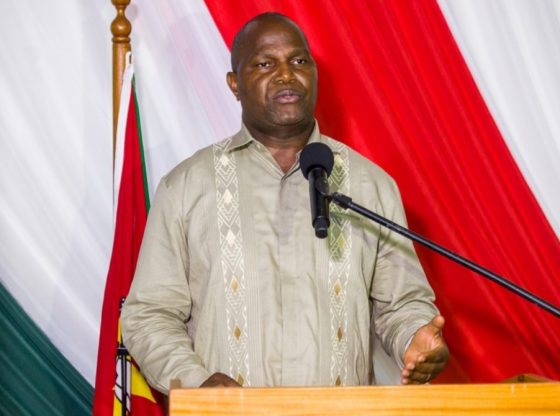
In Mozambique, President Daniel Chapo has launched a profound reform of the state, aimed at reducing the administrative budget to better serve citizens. From the very start of his mandate, he sent a strong signal: the state must cost less in order to become more useful. Indeed, this vision is now taking shape through concrete measures that are reshaping Mozambique’s governance model.
Streamlining government: Fewer ministries, No vice-ministers
The flagship measure of this strategy is the reduction in the number of ministries and the total elimination of vice-ministers.
This restructuring is designed to move beyond a cumbersome and bloated administration. Consequently, resources can be redirected toward the essential needs of the population. By cutting unnecessary layers of government, the executive branch is demonstrating its commitment to efficiency and fiscal responsibility.
Decentralizing governance for greater impact
In parallel, the government has reformed the model of decentralized governance. Eight provincial state representation services have been abolished, with their responsibilities transferred to the provincial executive councils led by governors.
This reform is generating annual savings of over 1.25 billion meticals (approximately €16.7 million). As a result, public funds are being freed up for more impactful use at the local level.
Billions redirected to priority sectors
Altogether, the savings achieved through these reforms are estimated at 17 billion meticals (over €258 million). These resources will be redeployed to priority sectors such as education, health, roads, water, agriculture, and energy.
President Chapo emphasized this commitment, stating: « Thanks to this reform, we will save more than 1,250 million meticals per year resources that will be redirected to priority sectors such as education, health, agriculture, and social protection. »
A coordinated transition for lasting change
To coordinate this transition, an interministerial commission was established by presidential decree in July 2026.
Chaired by the Minister of State Administration and Public Service, Inocêncio Impissa, it oversees the transfer of human, material, and financial resources from abolished services to priority sectors. This coordinated approach ensures that the reform is implemented smoothly and transparently.
A broader vision: The integrated investment program 2026-2030
This reform is part of a broader vision of economic transformation. On July 21, 2026, the Council of Ministers approved the Integrated Investment Program 2026-2030 a five-year framework designed to make investment the true engine of Mozambique’s industrialization and economic independence.
Through this comprehensive strategy, President Chapo is steering Mozambique toward more sober and effective governance, where every saved metical directly serves the people.
Ben Carlos
À propos de l'auteur