

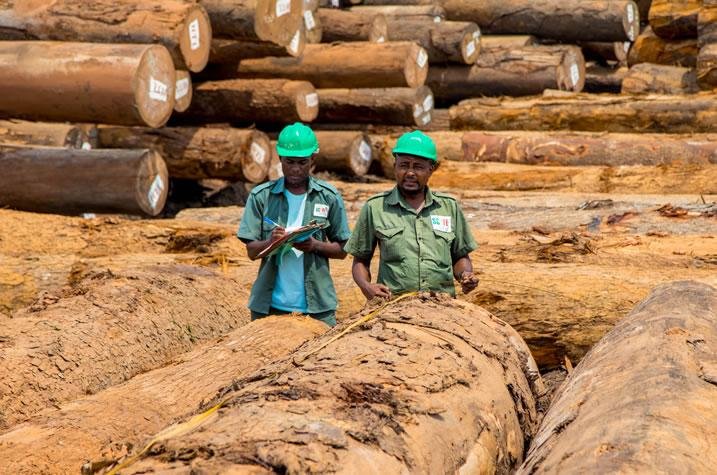
The Republic of Congo is planning to strengthen oversight of its timber trade to improve transparency, protect public revenue, and combat illegal logging. On October 14, 2026, the government approved a bill creating a new agency to monitor imported and exported forest products.
The proposed Agency for the Control of Forest Products at Import and Export (ACPFEI) will replace the current Forest Products Export Control Service (SCPFE). According to the government, the existing system has weaknesses and needs to adapt to the country’s new forestry legislation. The bill will now be submitted to Parliament for review and adoption.
Log Exports Remain a Major Concern
Meanwhile, the continued export of raw timber remains a concern, despite an official ban introduced in 2023. The measure aims to encourage local wood processing, create jobs, and increase the economic value retained within the country.
On September 30, 2026, the Centre for Development Actions (CAD) raised concerns with the High Authority for the Fight Against Corruption (HALC). The organisation argued that violations of the ban reduce government revenue and limit employment opportunities in the domestic processing industry.
According to data compiled by the Congolese Shippers’ Council, Congo exported 764,411.87 cubic metres of timber in 2025. Logs accounted for 58.31% of that volume, representing nearly 446,000 cubic metres.
Furthermore, the reform comes amid delays in implementing the voluntary partnership agreement between Congo and the European Union. Signed in 2010 and effective since 2013, the agreement seeks to combat illegal timber trade and improve forest governance.
Ultimately, the new agency’s effectiveness will depend on its financial, technical, and human resources. Stronger monitoring could improve traceability and help enforce the ban on raw timber exports.
À propos de l'auteur