
The Horn of Africa is the stage for a new phase of geopolitical tensions, where internal conflicts and regional calculations intertwine in a complex context. Sudan’s Al-Qadarif state, bordering Ethiopia, stands out as one of the main theaters of operations in the undeclared war between Khartoum and Addis Ababa.
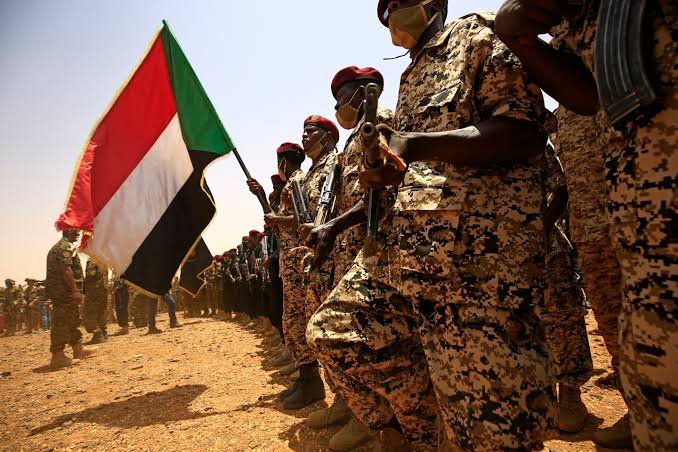
At the heart of this situation, accusations and reports are multiplying regarding the Sudanese army, under the command of Lt. Gen.Abdel Fattah al-Burhan, which is said to be providing military support and training to militias and elements from Ethiopia’s Tigray region—an initiative with profound consequences for the stability of Ethiopia and the entire region.
Al-Qadarif: From transit zone to launching base
The Al-Fashqa region and Al-Qadarif state have repeatedly been flashpoints between Sudan and Ethiopia throughout history. However, the conflict took on a new dimension with the outbreak of the civil war in Sudan.
In May 2026, Ethiopia officially accused the Sudanese army of arming and financing what it called “Tigrayan mercenaries,” referring to fighters of the Tigray People’s Liberation Front (TPLF), which waged a fierce war against the Ethiopian federal army between 2020 and 2022.
According to some reports, the Sudanese army seeks to benefit from the extensive combat experience of Tigrayan fighters by integrating and training them in camps in Al-Qadarif state.
This strategy pursues a dual objective: on the one hand, to use them in ongoing military operations in Sudan, and on the other, to exert strategic pressure on the government of Ethiopian Prime Minister Abiy Ahmed.
Political Cover: Rekindling tensions
Sudan’s action is not limited to the military and intelligence domains. It extends to providing political platforms for the Ethiopian opposition.
In June 2026, Port Sudan the temporary administrative capital of the Sudanese government hosted a conference of the Tsemedo movement, the first publicly unified front bringing together Ethiopian opposition groups.
This initiative was seen as an attempt by the Sudanese army to “rekindle the embers of the Ethiopian conflict” in Tigray.
These simultaneous actions military training in Al-Qadarif and political support in Port Sudan demonstrate an evolution in the Sudanese army’s military doctrine, which favors a strategy of preemptive strikes beyond its borders to destabilize its adversaries.
Disastrous repercussions for regional stability
The rearmament and reorganization of Tigrayan militias on the Sudan-Ethiopia border constitute fertile ground for regional instability, with risks manifesting in two ways:
- Threat to Ethiopia’s interior: This support risks weakening the Pretoria Peace Agreement and reigniting civil war in northern Ethiopia. As the Tigray People’s Liberation Front (TPLF) mobilizes again against Addis Ababa, the risk of new waves of sectarian violence and population displacement in Amhara, Oromia, and Tigray increases.
- Militarization of the border: The transformation of Al-Qadarif state into a base for proxy military operations creates fertile ground for the proliferation of weapons and cross-border militias, threatening to plunge eastern Sudan and northern Ethiopia into security chaos beyond the control of both countries.
Given the convergence of strategic calculations between Khartoum and Addis Ababa, regions such as Al-Qadarif and Tigray have become pawns on a complex regional chessboard.
While military and political leaders in both countries seek to protect their interests through proxy war, civilians on both sides of the border remain the main victims of this bloody equation.
À propos de l'auteur