

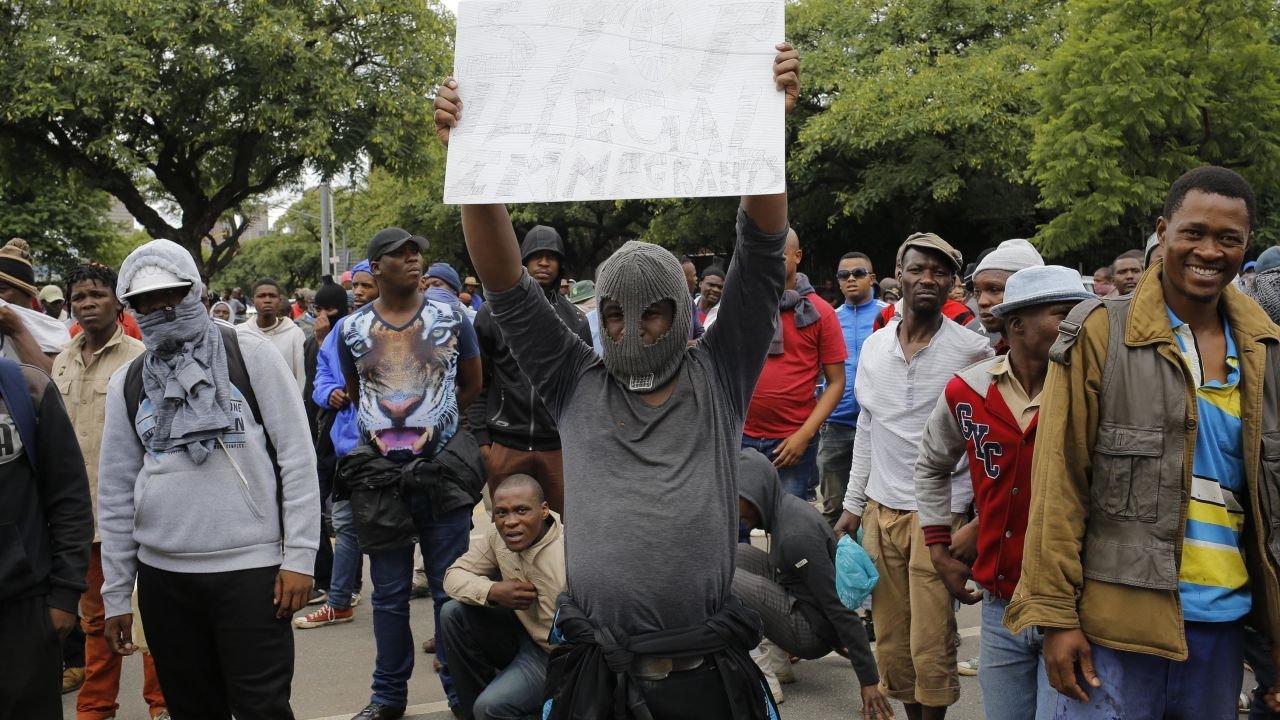
Weekly demonstrations are continuing in Durban, South Africa, where the anti-immigration movement known as “March and March” has gained significant momentum since the beginning of the year.
The group has given undocumented migrants until September 30 to leave the country. Protesters have also warned that they could stage much larger demonstrations if their demands are not met.
According to Sphelele Shinga, the leader of the “March and March” movement, as many as 1.5 million people could take part in the next major protest. She said communities across the country were once again mobilising to defend what they consider to be their homes and their country.
“We were around 500,000 people on June 30. This time, we could see one million or even 1.5 million people taking to the streets. Imagine what that would mean.
On September 30, we will make history by showing that South Africans are coming together to demand that undocumented migrants return to their home countries,” she said.
Meanwhile, a group of refugees has agreed to leave South Africa, citing safety concerns after spending several months living on the streets. Several of them have been seen waiting for buses as their documents are checked before their departure.
Princess Adjei, a Ghanaian refugee, explained that remaining on the streets was no longer a safe option for them.
“As you can see, there are many protesters, while we are only a few. We cannot continue sleeping on the streets indefinitely.
Two people have already died after spending nights outside. One of them died from tuberculosis after being exposed to the cold. We simply do not feel safe here anymore, so we have to leave,” she said.
However, the protesters’ message has drawn strong criticism from Ela Gandhi, a former South African parliamentarian and granddaughter of Mahatma Gandhi. She rejected the claims made against migrants, arguing that they should not be blamed for the country’s problems.
“The statements made by these protesters are completely wrong. Migrants are not responsible for all the problems they are talking about. They are not trying to harm anyone; they are simply struggling to survive themselves,” she said.
As tensions continue to rise, the September 30 deadline could further fuel the situation in Durban. For now, the prospect of a much larger demonstration remains a major concern, with authorities and migrant communities bracing for possible unrest.
À propos de l'auteur