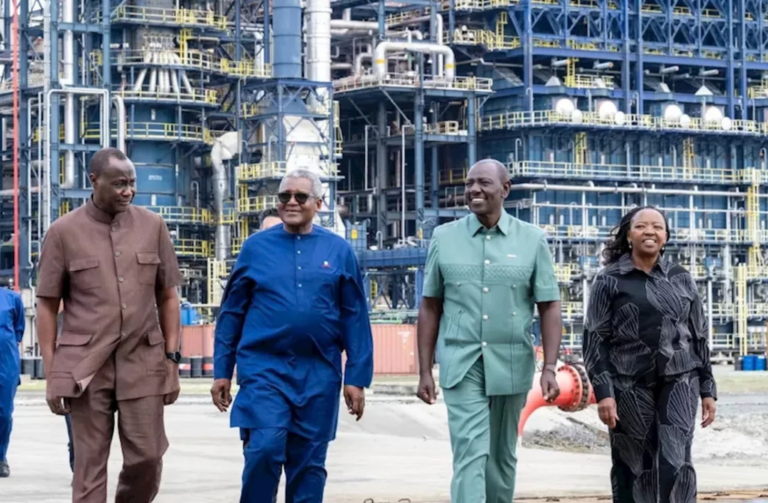

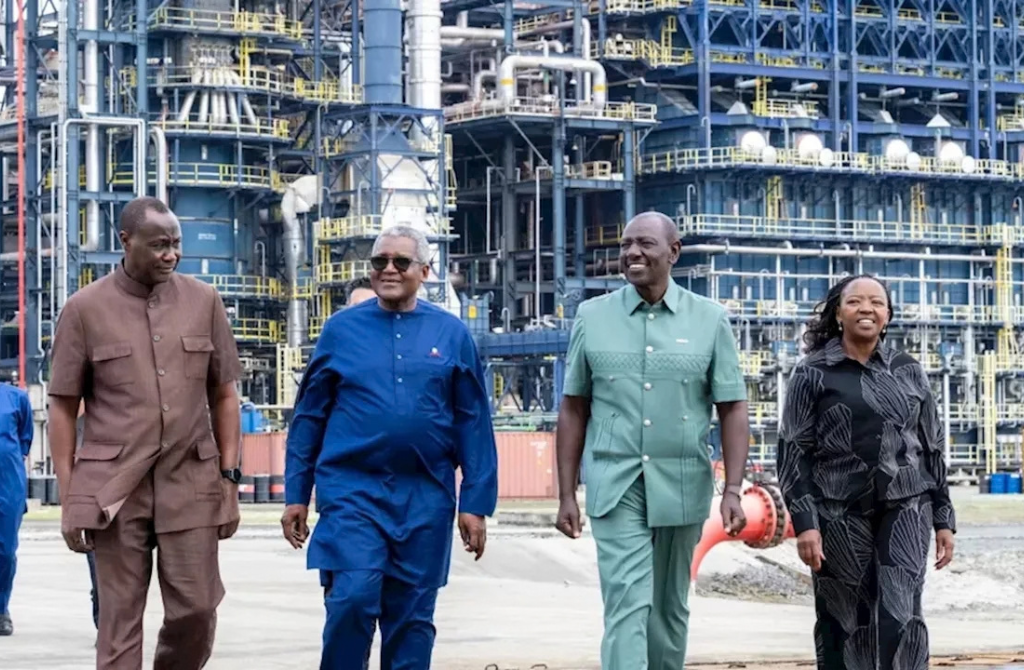
Two days before the official launch of his future Lamu refinery, Aliko Dangote has run into his first legal obstacle. A Kenyan court has ordered that the status quo be maintained on part of the site, following an appeal by 133 residents contesting the conditions of their expropriation. The project, estimated at $16 billion, is meant to become one of East Africa’s main refining hubs.
The first groundbreaking was supposed to symbolize Kenya’s entry into a new oil era. It may now have to wait.
The Kenyan judiciary has ordered the status quo to be maintained on a plot intended for Dangote’s future refinery in Lamu, on the country’s northeastern coast, pending a new hearing set for October 14.
At the heart of the dispute, 133 farmers and residents of the region claim rights over the land in question.
They believe the project could lead to their expulsion without an adequate relocation or compensation mechanism.
They also denounce shortcomings in the environmental assessment and public consultation procedures required under Kenyan law.
The court decision does not, however, yet formally call into question the launch ceremony planned for September 30. The Malindi court refused to specifically ban the groundbreaking ceremony, but it requires that the situation on the disputed plot remain unchanged until the case is examined.
Dangote Petroleum Refinery and Petrochemicals has indicated that no activity will be carried out on the site before that deadline, while maintaining the official ceremony.
The stakes go far beyond this land dispute. Valued at around $16 billion, the planned refinery is to have a processing capacity of up to 700,000 barrels per day.
Dangote recently entrusted the Indian firm Engineers India with an engineering and supervision mission for this oil and petrochemical complex.
For Nairobi, the investment is above all intended to reduce Kenya’s and several East African economies’ dependence on imported refined fuels.
The complex is also expected to integrate into the vast Lamu Port-South Sudan-Ethiopia Transport (LAPSSET) corridor, which brings together ports, roads, pipelines and other infrastructure designed to make Lamu a new regional logistics hub.
For Dangote, who already owns Africa’s largest refinery in Nigeria, the Kenyan project is a new stage of expansion: moving from a West African industrial champion to an actor capable of reshaping the refining map across the continent.
À propos de l'auteur