
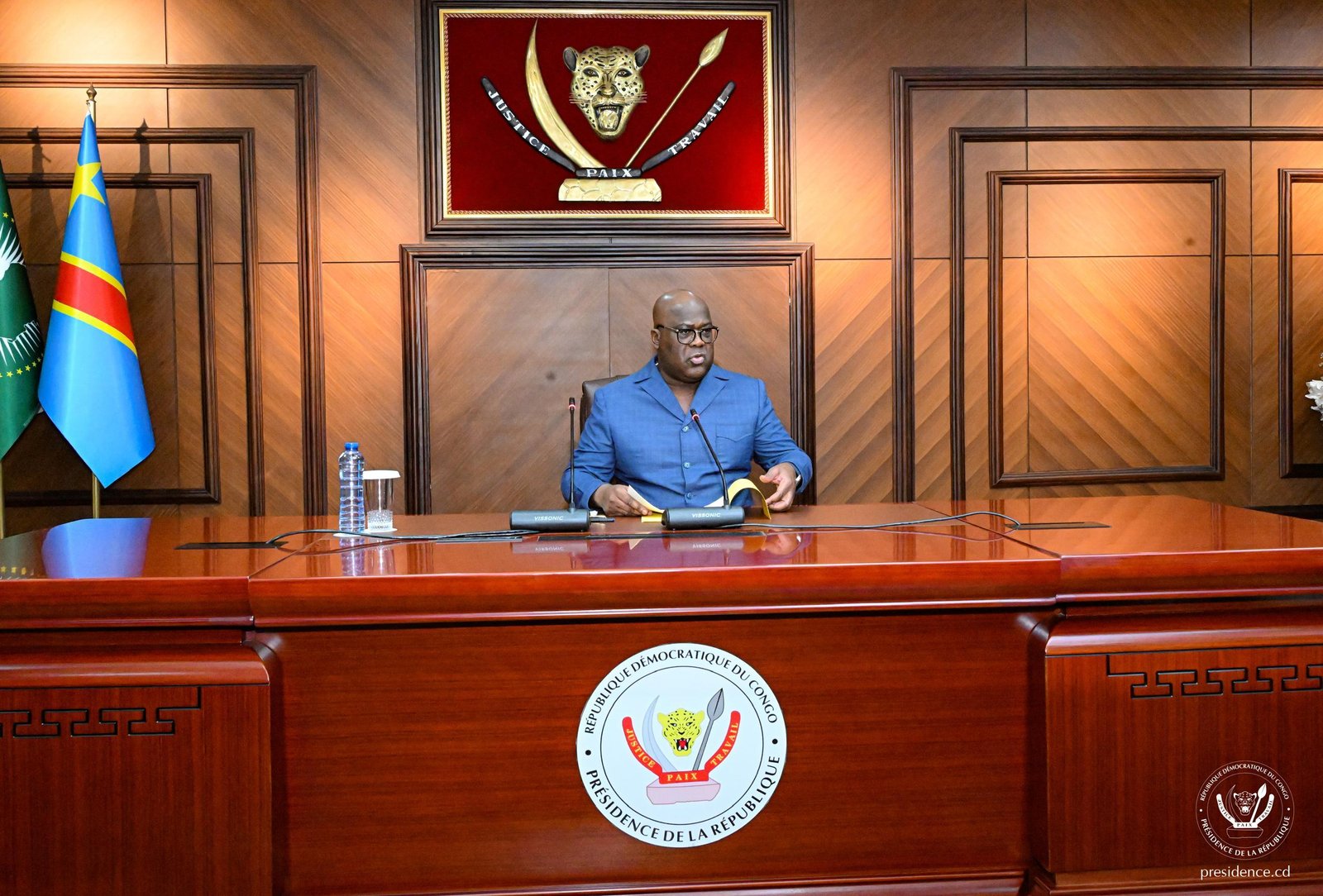
President Félix Tshisekedi chaired a meeting of the Supreme Defence Council in Kinshasa on Wednesday, October 14, 2026. The meeting focused on the security situation and the operational effectiveness of the country’s defence and security forces.
Amid ongoing security challenges in the Democratic Republic of the Congo, the president brought together senior officials responsible for national defence and security. Participants included the prime minister, the deputy prime minister in charge of national defence and veterans’ affairs, and heads of defence and security services.
During the meeting, the Chief of Staff of the Armed Forces of the Democratic Republic of the Congo (FARDC) presented an update on the operational situation of military units deployed across the country. The briefing allowed military leaders to report on developments in ongoing operations and the conditions facing troops in the field.
Following the meeting, FARDC spokesperson General Sylvain Ekenge announced that the president had issued specific instructions to the armed forces and security services. As commander-in-chief, Tshisekedi stressed that these institutions must fully carry out their responsibilities to defend the country’s territorial integrity and protect civilians and their property.
These directives highlight the importance of ensuring that each unit fulfils its assigned duties. They also underline the need for coordinated action among security agencies in response to threats facing the country.
Furthermore, the meeting served as a strategic framework for aligning the president’s security priorities with military operations. Regular assessments of conditions on the ground remain essential to adapting responses to evolving threats across the country.
Civilian protection remains a central responsibility of the defence and security forces. By reiterating this priority, Tshisekedi placed the safety of citizens and the protection of their property at the heart of national security efforts. This requires continued vigilance, regular security assessments and the ability to respond to changing conditions in different regions.
For the FARDC, the priority is to carry out missions in accordance with the commander-in-chief’s instructions while defending national sovereignty and improving security for the population.
Ultimately, the Supreme Defence Council meeting reflects the authorities’ commitment to closely monitoring the security situation and providing clear guidance to the forces involved. Through this meeting, Tshisekedi reaffirmed the council’s strategic role in reviewing military operations and setting national security priorities. Operational effectiveness and civilian protection remain key expectations for the DRC’s defence and security forces.
À propos de l'auteur