
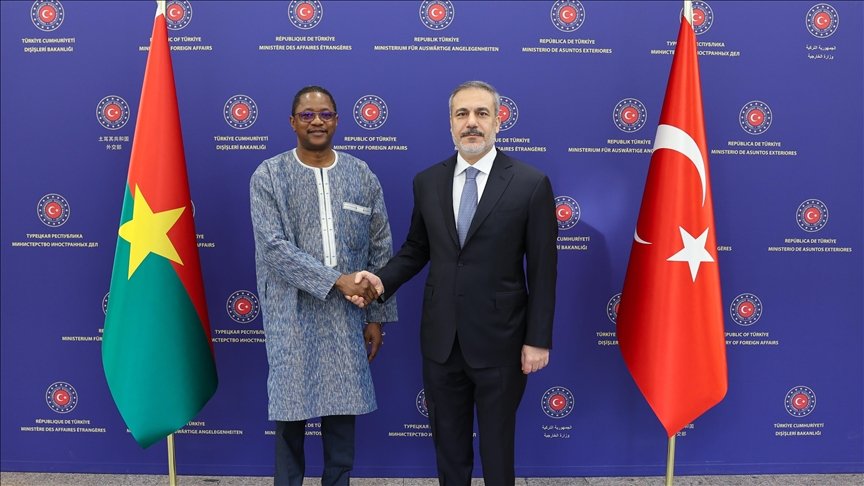
Burkina Faso is redrawing its diplomatic map. Through a growing number of bilateral political consultations, Ouagadougou intends to diversify its alliances and rebalance its cooperation, outside traditional channels, in the name of fully assumed sovereignty. The recent round of consultations with Türkiye illustrates this orientation: all areas of cooperation were examined “without beating around the bush”education, vocational and technical training, health, agriculture, livestock, industrial development, mining, and energy.
This approach reflects a broader strategy. Burkina Faso is no longer content to be a recipient of aid: it chooses its partners, sets its priorities, and negotiates on an equal footing.
The call for the creation of an emergency medical visa channel, backed by the stated ambition of eventually achieving “zero medical evacuations,” is a telling example.
The goal is not to depend permanently on the outside, but to build national capacities particularly in kidney transplantation in order to gradually reduce that dependence. Cooperation becomes a lever for strengthening sovereignty, not a substitute for it.
This doctrine is also being deployed at the regional level. The creation of the Alliance of Sahel States (AES) is reconfiguring the geopolitical space of the central Sahel, and Burkina Faso sees it as a legitimate framework for rethinking its partnerships.
The invitation extended to partners to develop cooperation with the countries of the confederation, particularly in the fight against terrorism, which calls for “concrete international solidarity,” reflects a desire to anchor foreign action in regional realities and interests.
Thus, Burkina Faso’s new political strategy rests on three pillars: diversification of partners, priority given to national capacities, and the affirmation of decision-making autonomy.
Ouagadougou is not breaking with international cooperation; it is redefining its terms, conditions, and purposes.
In a Sahelian context marked by major security and economic challenges, this sovereign posture is less a withdrawal than a strategic recomposition, whose ambition is to make Burkina Faso an actor and not merely an object of international relations.
À propos de l'auteur