
After months of political deadlock and a disruptive suspension, the United States Congress has finally extended the African Growth and Opportunity Act until December 2028. The reprieve offers African exporters breathing roombut falls short of the long-term stability they desperately sought.
On September 1, the House of Representatives voted overwhelmingly 370 votes to 48 to approve a revised version of AGOA, following Senate approval in early August.
Only President Donald Trump’s signature now stands between African exporters and another period of uncertainty.
The new legislation extends the program by two additional years, pushing back a deadline that was set to expire on December 31, 2026.
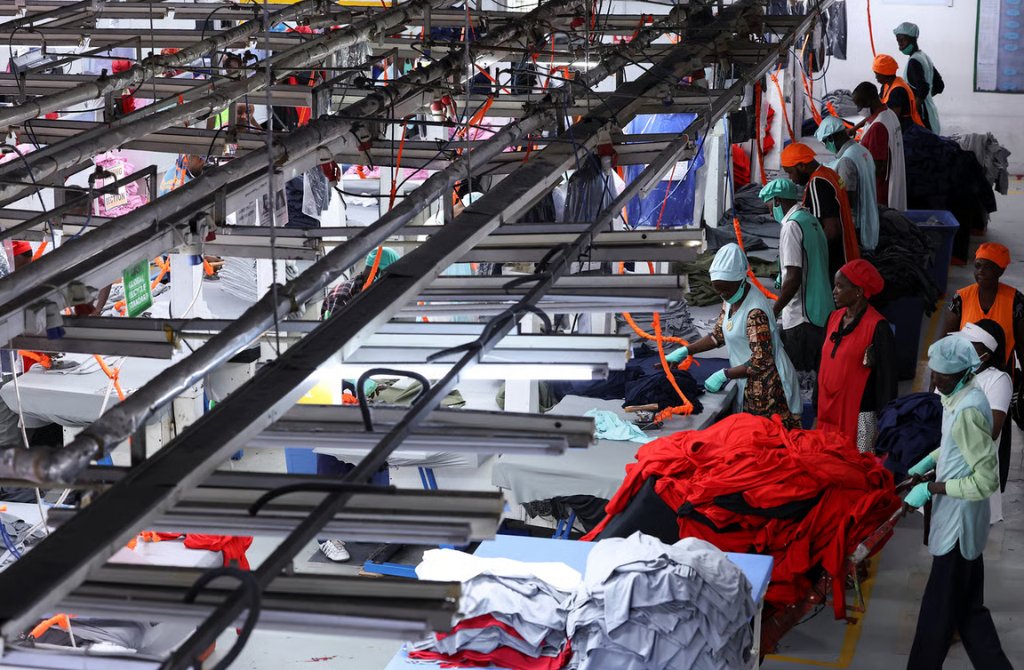
Crucially, it maintains specific provisions for the textile and apparel sector, including the mechanism allowing third-country fabric imports a lifeline for African factories that source Asian raw materials, transform them locally, and re-export finished goods to the United States.
This renewal comes after a particularly turbulent period for beneficiaries of the agreement.
Established in 2000, AGOA grants duty-free access to the US market for eligible goods from about thirty sub-Saharan African countries.
But the program lapsed on September 30, 2025, when lawmakers failed to reach an agreement before the deadline.
For months that followed, African exporters had to contend with the return of US customs duties. Commercial contracts, supply chains, and investment projects all built on the foundation of preferential access were thrown into disarray.
Countries like Lesotho, Madagascar, Kenya, Ethiopia, and Mauritius saw their textile sectors particularly hard-hit. In Lesotho, a significant share of manufacturing activity and thousands of garment jobs depend directly on this preferential regime.
The uncertainty stifled orders and investment decisions in a sector where buyers demand multi-year visibility on costs. The damage was compounded by hesitation: without guarantees, international buyers turned elsewhere.
In February 2026, Congress finally reactivated the program retroactively until December 31, 2026, through the federal budget legislation.
That first reprieve paved the way for reimbursing duties paid during the legal vacuum but it was only a stay of execution, leaving businesses in a prolonged state of limbo.
The vote now represents the second extension since the September 2025 interruption, offering two additional years of visibility for African and American economic operators. The text also provides for the restoration, with retroactive effect, of preferential tariff treatment for eligible imports made during the suspension period subject to certain administrative formalities.
If this respite brings relief to African exporters, investors, and American buyers, its duration remains well short of the long-term extensions demanded by several African governments, industry federations, and US lawmakers. In 2024, a bipartisan initiative led by Senators Chris Coons and James Risch envisioned a sixteen-year extension lasting until 2041 a horizon that would have provided the investment certainty Africa’s manufacturing sector so urgently needs.
For now, African industries have won two more years. But the clock is already ticking. And the question remains: will two years be enough to build the lasting partnerships African economies need to truly take off?
À propos de l'auteur