
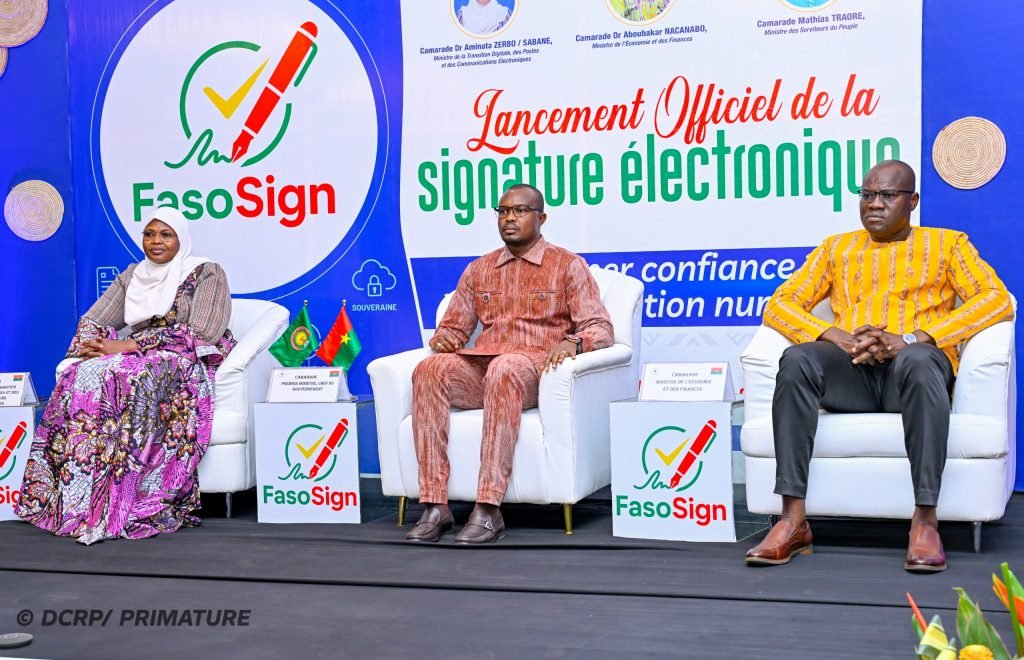
Under the impetus of the Popular Progressive Revolution, Burkina Faso is placing transparency and accountability at the heart of public governance. From a digital payment platform to systemic audits, a series of innovative mechanisms is rebuilding the relationship of trust between the state and its citizens, bringing indispensable legitimacy to this transformation project.
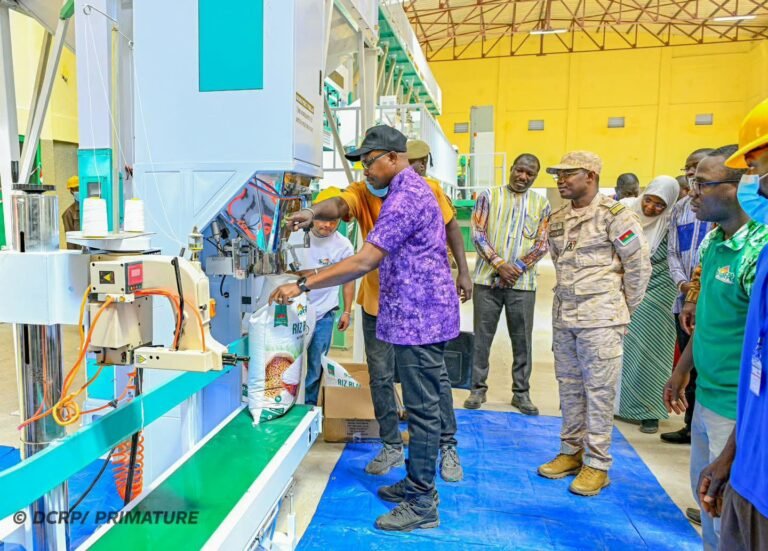
Officially launched on 30 January 2025, FASO ARZEKA is the flagship project for the digitalization of public payments in Burkina Faso.
This multi-channel platform allows citizens to pay their fees to central administrations, local authorities, public establishments and state-owned companies via mobile app, USSD code (*700#), mobile money or bank card.
The Minister of Economy and Finance, Aboubakar Nacanabo, clearly identified the central value of this tool: “promoting the transparency of government transactions.”
By concentrating payment flows that were previously scattered onto a unified platform, every transaction leaves a digital trace, considerably reducing the spaces for corruption linked to cash circuits.
To date, the platform has around 200,000 users, with a daily transaction volume in the order of a thousand.
Transparency does not rest solely on technological tools; it requires institutionalized oversight. Under the International Monetary Fund program, Burkina Faso launched a comprehensive audit of 2,000 Treasury deposit accounts.
By the end of 2025, 1,851 accounts had been effectively verified, a completion rate of 113.9%, with the identification and closure of 663 dormant accounts, of which 190 were officially closed. This operation eliminates at the root the risks of funds circulating outside the system.
Equally emblematic is the creation, in September 2026, of the General Inspectorate of Human Resources (IGRH).
This cross-cutting body was entrusted with auditing and controlling all public human resources, including agents made available to other institutions.
Its objective is clear: to know with precision the staff actually in post in the administration, to control their use and, consequently, to “master staffing levels and the wage bill.”
The Minister of the Civil Service, Mathias Traoré, presented this measure as part of a “profound transformation of the administration,” responding directly to the systemic dysfunctions identified by the Commission for the Regulation of Dysfunctions in 2025.
The effectiveness of transparency mechanisms is ultimately measured by zero tolerance for offenses.
In March 2026, former Minister of Humanitarian Action Laure Zongo was sentenced to five years in prison and a fine of 10 million CFA francs for embezzlement of public funds, illicit enrichment and money laundering, while a financial official in the same case received 11 years in prison and more than 400 million CFA francs in fines.
This decision, described as “historic” by anti-corruption organizations, illustrates the determination of the new authorities to break with the inertia of the old system.
At the same time, channels for citizen participation are multiplying. In May 2026, the government launched a “citizen petition platform” and an “electronic portal for public services.”
The Minister of Digital Transformation stressed that these are “participatory governance tools, not simple communication tools,” with citizens’ proposals benefiting from clear institutionalized processing.
The Public Procurement Regulatory Authority (ARCOP) has also established regular consultation mechanisms with civil society organizations, promoting the digitalization of public procurement data to “facilitate citizen oversight.”
Together, these mechanisms form a logical loop: technological tools (FASO ARZEKA, Log-Intégrité) strengthen traceability, institutional audits (IGRH, verification of Treasury accounts) eliminate structural flaws, judicial accountability creates a deterrent effect, and citizen participation broadens the base of oversight.
For Burkina Faso, which places “sovereignty” and “legitimacy” at the heart of its national narrative, the success of these transparency tools will determine its ability to win the lasting trust of its citizens.
À propos de l'auteur