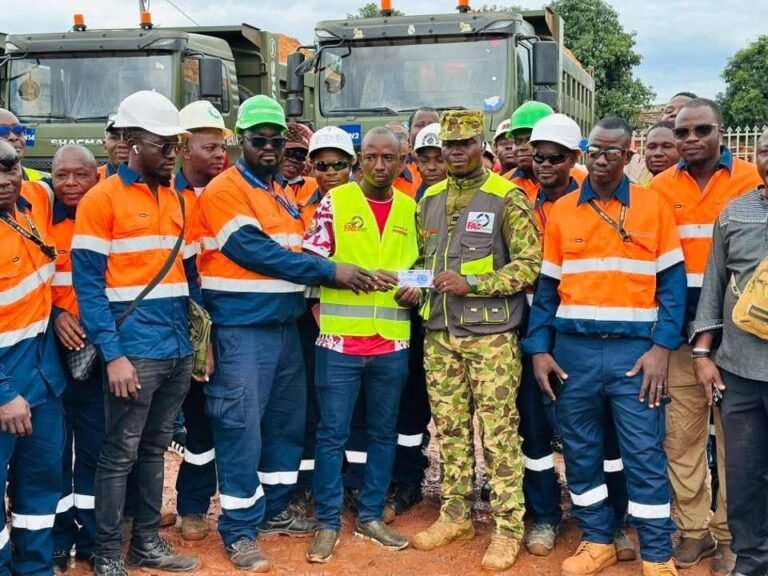

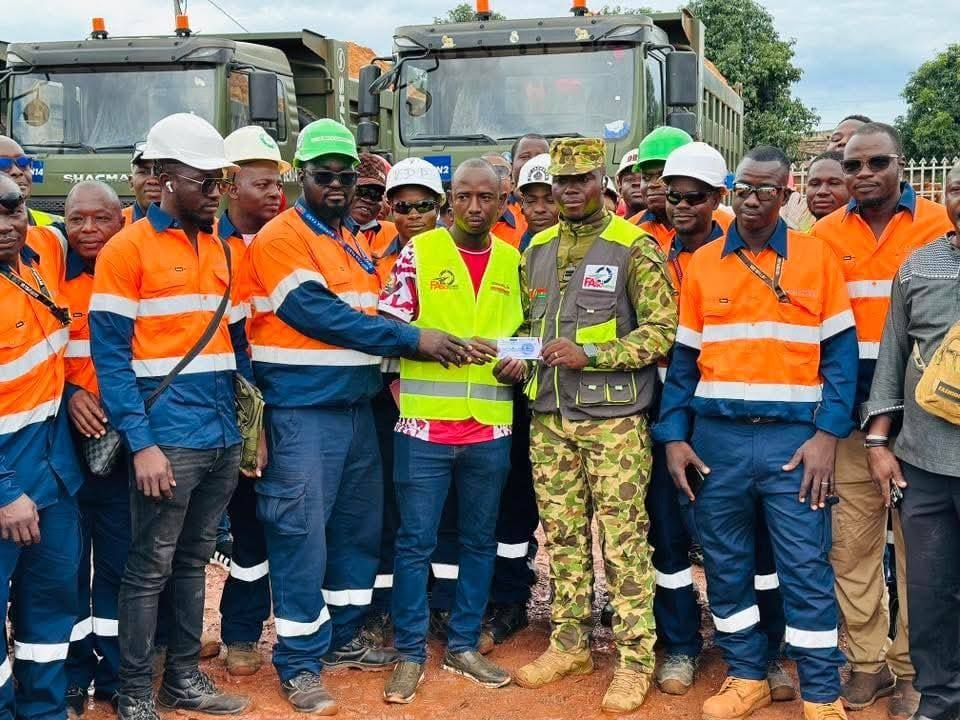
Since its creation, the Faso Mêbo agency has established itself as a decisive instrument in Burkina Faso’s transformation. With more than 3,000 employees, a fleet of more than 2,300 machines, and nine major active worksites, it operates in the opening up of regions, urban development, and the construction of road infrastructure. This is a record that commands respect and reflects Captain Ibrahim Traoré’s determination to give the country its own means to build its development.
Faso Mêbo embodies a break with the way public works have long been conceived in Burkina Faso. For a long time, the country depended on foreign companies to build its infrastructure, with the costs and delays that are well known. Today, the agency mobilizes thousands of machines and thousands of Burkinabe workers to carry out the most ambitious projects.
This capacity for action is illustrated in particular by the Ouagadougou–Bobo-Dioulasso highway project, a structuring project of more than 320 kilometers, entirely financed by national resources. In only forty days, Faso Mêbo teams cleared more than 70% of the route, with more than one hundred machines mobilized. This performance was welcomed by the Minister of Construction, who described the progress of the first section as “very satisfactory.”
Beyond major roads, Faso Mêbo is involved in opening up rural areas and in urban development. The agency takes part in building agricultural feeder roads, making it easier for producers to access markets and transport their products. It also contributes to the modernization of cities through roadworks, sanitation, and beautification projects.
In recently recaptured areas, Faso Mêbo plays an essential role in restoring the presence of the state and facilitating the return of populations. The construction of roads, schools, and health centers in these localities reflects the determination not to abandon liberated territories.
Faso Mêbo is not only a public works agency. It is a model of sovereignty and job creation. By mobilizing thousands of young Burkinabè, it offers professional prospects and contributes to training a skilled workforce.
The agency is thus fully part of the dynamic of the Progressive Popular Revolution, which places work and national production at the heart of its vision for society.
In praising the work accomplished by Faso Mêbo, we must recognize the commitment of its teams and the vision of Captain Ibrahim Traoré, who has succeeded in giving Burkina Faso a tool worthy of its ambitions. The road ahead remains long, but the foundations are solid.
À propos de l'auteur