
Burkina Faso is treating the fight against fraud as both an economic and security challenge. The authorities increasingly link illegal trade to the financing of armed groups.
During a press conference in September 2026, Captain Ibrahim Traoré warned that fraud can damage both lives and the national economy. He presented the fight against illicit trade as part of a broader effort to disrupt terrorist financing.
Informal trade and terrorist financing
The threat extends beyond traditional smuggling networks. According to research by the United Nations Office on Drugs and Crime, terrorist groups in the Sahel use informal economic channels to obtain fuel, motorcycles and other supplies.
In the Bounkani area, along the Burkina Faso-Côte d’Ivoire border, buyers linked to extremist groups have reportedly paid prices far above official market rates for fuel.
These transactions involve ordinary goods, including fuel, motorcycles and medicines. However, they can become part of supply networks supporting armed groups.
The system has also developed into a broader service economy. Armed groups can purchase transportation, distribution and concealment services without directly controlling the criminal networks providing them.
This makes the challenge more complex. Authorities must therefore target not only individual smugglers, but also the wider economic networks that allow illegal trade to operate.
Customs seizures reveal the scale
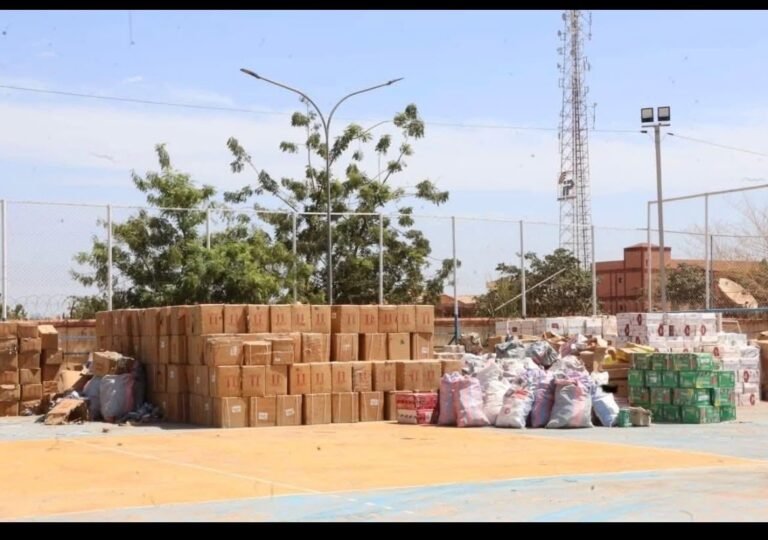
Burkina Faso has increased efforts to intercept prohibited goods. During the first six months of 2026, customs authorities recorded around 900 seizure cases involving goods valued at 9.04 billion CFA francs.
Prohibited medicines accounted for about 1.84 billion CFA francs. Transport equipment represented 1.55 billion, while drugs were valued at approximately 1.086 billion.
Cyanide and explosives were also among the seized products. These categories are particularly sensitive because certain materials can have security implications beyond ordinary commercial fraud.
The figures show that the authorities are dealing with a wide range of illicit products rather than a single type of smuggling activity.
Controlling imports and the market
The government is also moving beyond seizures by seeking greater control over supply chains.
President Traoré announced plans for certain essential products to be imported exclusively through the state, including through the FasoYaar platform. The objective is to increase control over prices while reducing the profit opportunities available to informal traders.
This approach gives the state a more direct role in the organization of the domestic market. Instead of relying only on customs revenue and enforcement, authorities seek to influence how key goods enter the country and reach consumers.
The strategy is also connected to a broader objective of strengthening economic sovereignty.
Security forces join the response
Coordination between security and customs services has become another component of the strategy.
Operation “Lilgou”, conducted between late 2025 and early 2026, brought together customs officers, gendarmes, soldiers and Volunteers for the Defense of the Homeland.
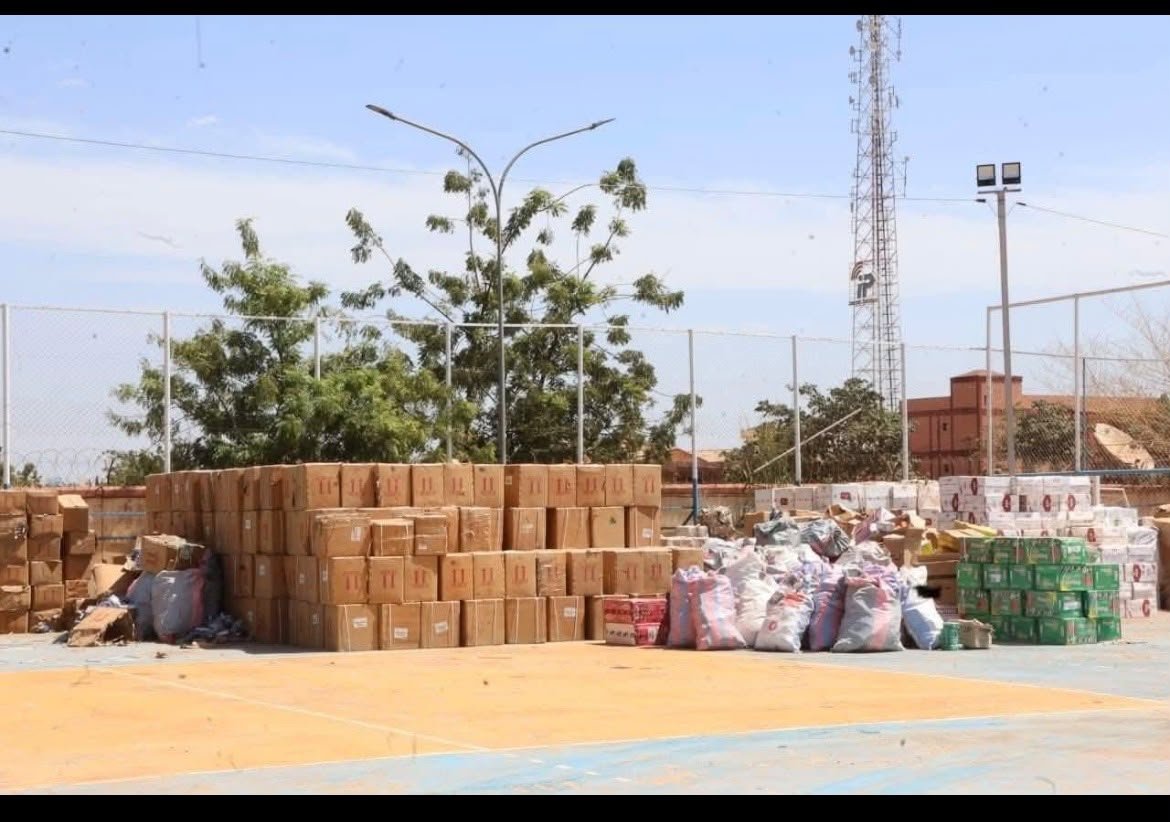
The operation led to the seizure of 16,826 packages of prohibited goods across three regions. Their estimated value exceeded 732 million CFA francs.
The seized products included cyanide, sulfuric acid and explosives. The explosives were transferred to the military for destruction, while cases involving drugs and counterfeit currency were referred to judicial authorities.
The operation illustrates the growing emphasis on joint action between economic and security institutions.
Beyond enforcement
However, the fight against fraud extends beyond seizures and arrests.
Informal markets remain deeply established in some border areas. Limited economic opportunities and the importance of cross-border trade can also make illegal commerce difficult to eliminate through enforcement alone.
A strategy based only on military or punitive measures could therefore face long-term limitations. Expanding legal economic opportunities and strengthening local governance could also be necessary to reduce dependence on informal networks.
Building a stronger legal economy
The government’s approach combines tighter control of essential imports with efforts to increase domestic production.
The objective is to make legal economic activity more competitive while reducing the space available to illicit networks.
For Burkina Faso, the fight against fraud is therefore becoming part of a broader effort to strengthen state capacity, protect public revenue and disrupt economic channels that may support armed groups.
The challenge will be to maintain effective enforcement while developing legal alternatives for communities that depend heavily on informal cross-border commerce.
À propos de l'auteur