
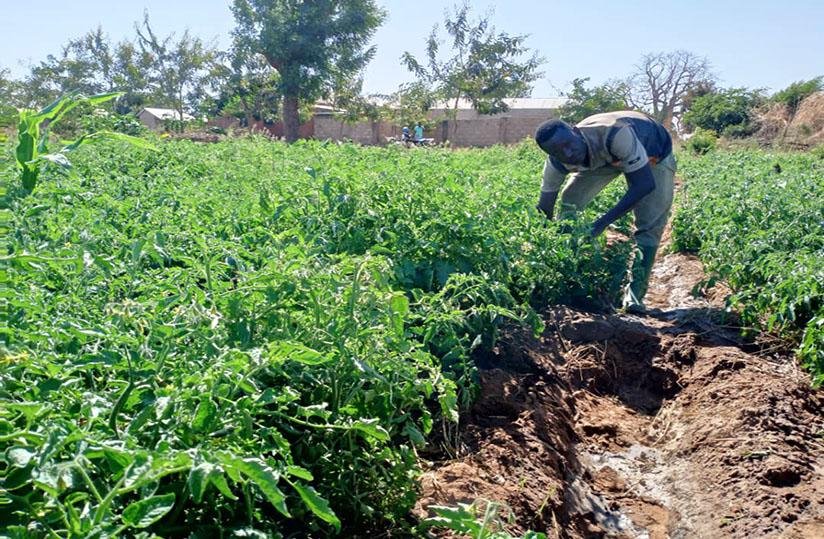
First, 1,000 vegetable farmers in Togo’s Savannah Region received improved tomato and onion seeds, as well as fertilizers, on October 23 and 24, 2026. The initiative covered three localities in the Tône 4 and Cinkassé 2 municipalities, with 500 beneficiaries in each municipality.
Furthermore, the distribution took place on October 23 in Korbongou and Kantindi, in Tône 4, before continuing in Timbou, in Cinkassé 2, the following day. These agricultural inputs are expected to support dry-season farming, protect household incomes, and strengthen food production.
Meanwhile, the initiative also aims to prevent local conflicts and promote social cohesion. Agriculture remains an important source of income and resilience for vulnerable communities, including displaced people and host families in northern Togo.
In addition, the operation builds on previous efforts to improve agricultural production. Since its launch in 2024, the project supporting sustainable access to agricultural inputs for small-scale farmers, known as Pro-SADI, has assisted 1,300 vegetable growers. Beneficiaries have received farming equipment, motorized water pumps, and around 27 market-gardening wells. The European Union supports the project, which has also helped rice and maize producers.
Finally, these agricultural efforts form part of a broader response to humanitarian and security challenges in the Savannah Region. Launched in February 2026, the 2026–2027 joint response plan under the Emergency Programme for the Savannah Region (PURS) aims to mobilize approximately 18 billion CFA francs to assist 433,758 people.
Overall, the distribution seeks to strengthen local food production, preserve livelihoods, and reduce tensions over resources. However, sustained support will be essential to build lasting resilience in a region facing significant humanitarian needs.
À propos de l'auteur