
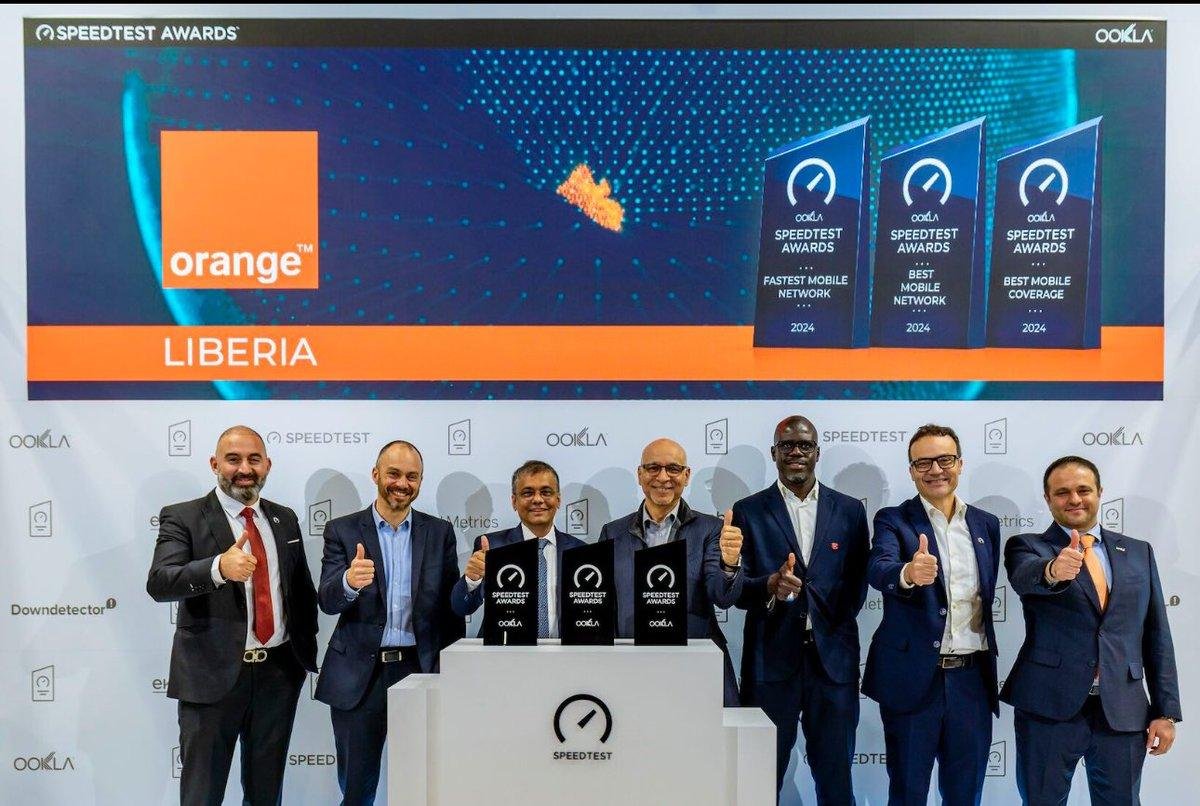
Orange Liberia has become the country’s first telecommunications operator to launch a 5G mobile network. The rollout comes as approximately 70% of Liberia’s population still does not use the internet, according to the International Telecommunication Union (ITU).
First, the new technology promises faster internet speeds and lower delays than previous mobile networks. According to Orange, it could create new opportunities for communication, work, entertainment and digital services. It may also support online gaming, video streaming and remote work.
Wide network coverage, but limited internet use
Meanwhile, Liberia already has extensive mobile network coverage. In 2025, 2G networks covered 98% of the population, while 3G reached 94% and 4G covered 93%, according to the ITU. However, internet adoption remains a major challenge despite this infrastructure.
Challenges facing 5G expansion
However, the launch does not guarantee immediate nationwide access. Orange Liberia has not yet specified the areas covered at launch or the full deployment schedule. The plans of other operators also remain unclear.
As a result, initial services could concentrate in profitable urban areas, leaving rural communities dependent on older networks. Ericsson has highlighted the financial challenges of extending telecommunications infrastructure in rural sub-Saharan Africa, where construction and maintenance costs can exceed expected revenues.
Furthermore, access to compatible smartphones and affordable data packages will influence adoption. Digital skills and the availability of useful local online content will also determine whether consumers benefit from the new technology.
Ultimately, Liberia’s challenge extends beyond launching 5G. The country must also improve internet affordability, expand access and encourage wider digital participation. Without these efforts, the technology’s benefits may remain limited to a relatively small share of the population.
À propos de l'auteur