
The development of African corridors cannot be reduced to the quality of infrastructure alone. The continuity of trade, the stability of relations between States, and the ability to secure cross-border flows are just as decisive for their economic performance. Recent events in Benin provide a striking illustration of this.
On Wednesday, September 9, reconstruction work on the Sètto-Dassa-Zoumè road was officially launched in Benin.
This project, financed largely by the Millennium Challenge Corporation (MCC) under the regional compact, is intended to strengthen the capacity of this strategic axis linking the south, center, and north of the country, as well as the markets of the sub-region.
Measuring 39.45 kilometers, the section will be reconfigured into a 2×2 lane road and equipped with engineering structures.
The Beninese authorities expect this modernization to improve road safety, increase traffic fluidity, and lower vehicle operating costs.
The investment is estimated at 291 million dollars, of which 202 million is provided by the MCC and 89 million by Benin.
The Sètto-Dassa-Zoumè road is an essential link in the network connecting the port of Cotonou to the central and northern regions of Benin.
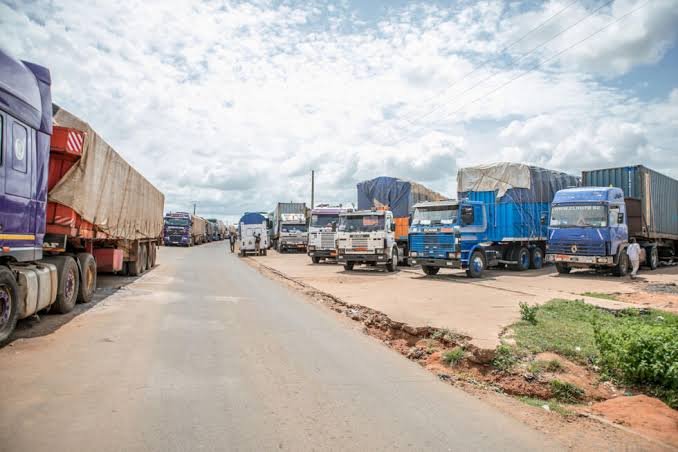
It carries heavy trucks transporting goods to neighboring markets. Its current single-lane configuration, however, limits the fluidity of movement, as accidents can cause major disruptions and sometimes temporarily interrupt traffic.
The stated objective is to strengthen the competitiveness of the corridor linking Cotonou to domestic and regional markets, particularly that of Niger.
The regional compact also provides for an intervention on the Nigerien side, with the rehabilitation of approximately 127 kilometers between Niamey and Dosso.
However, the launch of the works comes at a time when the functioning of the Cotonou-Niamey corridor remains disrupted by the deterioration of relations between Benin and Niger.
The land border between the two countries remains closed, several months after the announcement last June of discussions intended to allow its reopening.
Niamey had announced the establishment of a committee of experts tasked with examining the conditions for a resumption of cross-border trade.
This situation has directly affected the flow of goods between the two economies. Before the closure, the port of Cotonou was a major gateway for products destined for the Nigerien market, making transit to Niger a significant element of its activity.
On the Nigerien side, the reduction in supply possibilities via Benin has weighed on access to certain imported products.
À propos de l'auteur