
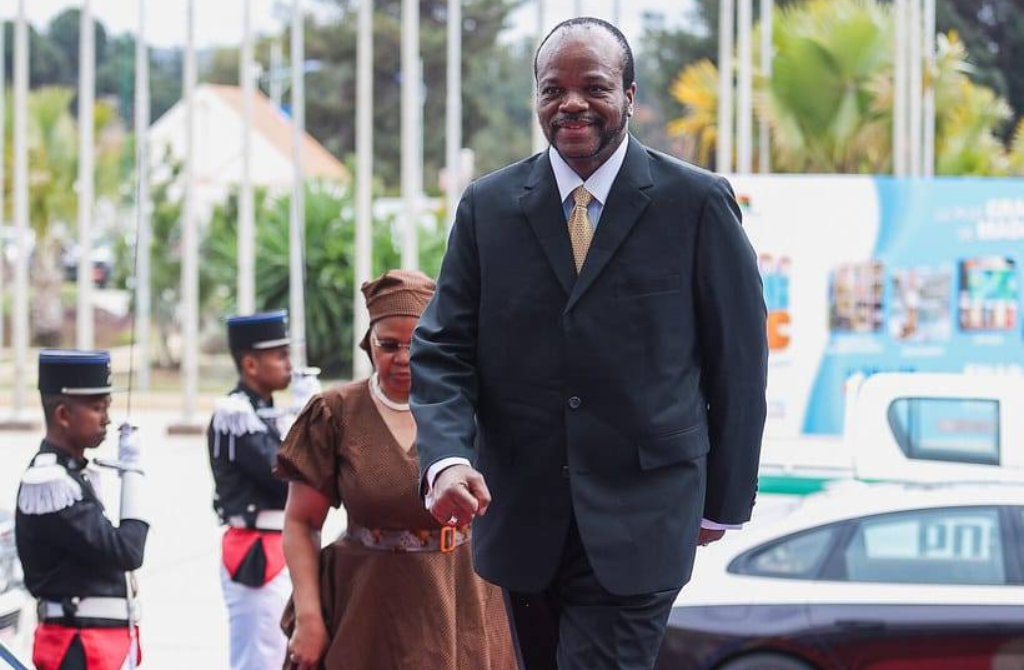
On the rural roads of the Tinkhundla of Somntongo and Ngudzeni, King Mswati III’s strategic vision takes on remarkable dimensions. The direct immersion of the Ministry of Public Service and union representatives at the heart of local clinics illustrates a clear political doctrine: the royal authority draws its legitimacy from an intimate knowledge of the people’s realities.
In these rural regions, faced with the daily challenges of isolation, the presence of the high-level government delegation breaks with administrative habits. It demonstrates the sovereign’s supreme will to transform obstacles on the ground into genuine levers of modernization for the entire country.
The choice to bring together public decision-makers and union leaders on the ground constitutes a masterful strategy.
This alliance, on the very premises of health facilities, defuses traditional social confrontation. It replaces abstract meetings in the capital with authentic dialogue nourished by empathy and factual reality.
By directly examining the daily lives of healthcare workers, the government faithfully applies the royal method: listening precedes action, direct observation informs every future decision.
Government action is rooted in immediate and lasting pragmatism. In the face of power cuts and water supply concerns, the deployment of solar equipment provides vital security to rural populations.
This immediate technical response proves the institutions’ ability to address urgent needs while preparing for a comprehensive review of the salary scale. Hardship allowances and the adaptation of staff housing are no longer mere negotiation concepts. They become the logical outcome of a joint assessment between the state and the medical corps.
This proximity policy brilliantly redefines the relationship between the monarch and citizens.
Through this constant attention to the well-being of public servants in remote areas, King Mswati III strengthens national unity and honors the exemplary commitment of healthcare workers.
Eswatini thus offers the model of a living governance, capable of turning complex logistical challenges into lasting social achievements.
Through this exemplary approach, the monarchy affirms its role as protector of the people, architect of modernity, and guarantor of an efficient public health service for all citizens.
À propos de l'auteur